Beyond Malware: How Hackers Use Your Own Tools Against You

Imagine a burglar having your house keys that have your favourite keychain in them, he unlocks your door takes what he wants and gets out of there like nothing happened while keeping the keys for later use.
Attackers using tools already *on your system* to hack it — it's like using your own hammer to break your lock.
That is exactly what Living Off the Land Binaries (or LOLBins for short) are in cybersecurity.
In this type of attack instead of bringing there own tools(malware) attackers use the programs that are native to your operating system weather it be windows, MacOS,or Linux these are the programs that you fully trust like the calculator app that you use daily. Now you might be wondering how do the attackers get access to your programs at the first place and the answer is they use classic social engineering tricks like phising emails to trick people in executing these LOLBins unknowingly.
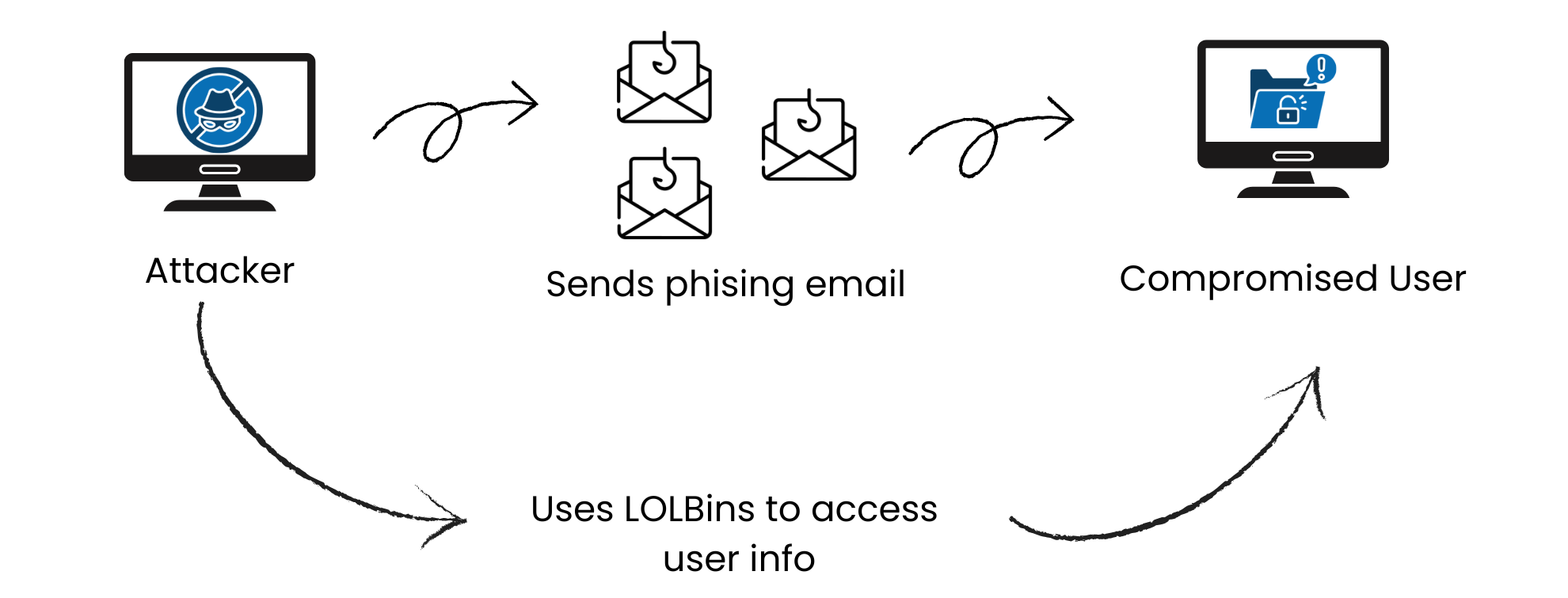
Why are LOLBins so effective?
The Answer lies within the core working of LOLBins they are not a malicious program or file that your antivirus or windows defender will flag as malicious these are the operating systems own programs and hence the antivirus will never suspect them of doing any malicious stuff and these kind of exploits are very hard to trace in digital forensics(investigation) as they directly run in the memory and are not stored anywhere on the system.
**How to identify them? **
They might be difficult to trace but not impossible there are some indicators that can be used to identify if your LOLBins are compromised or not these are:
-
To check for unexpected launches of PowerShell, mshta, certutil, regsvr32, rundll32, wscript, bitsadmin, msbuild, and other similar utilities.
-
You can check the task manager or similar program for other OS to monitor for any unusual tasks are being executed like your calculator executing commands on powershell which is well not normal to say the least.
-
Suspicious command lines like: -EncodedCommand, IEX, DownloadString, -NoProfile -WindowStyle Hidden, base64 blobs, or long one-liners being executed on your command shell.
Key Takeaways and Defense
So in one line:
LOLBins weaponize trust — so your best defense is visibility, restriction, and user awareness.What that means is:
-
Attackers Use What's Already There: They don’t “install” new malware; they gain access (via phishing, stolen credentials, etc.) and abuse legitimate OS binaries that are already trusted.
-
They Bypass Most Antivirus: Because these are trusted system files, traditional antivirus software often fails to flag their activity as malicious. This is why their activities can remain unnoticed.
-
Defense is About Visibility: You must monitor behavior, not just files. This means actively monitoring command lines, process trees, and script logs for suspicious commands.
-
Prevention Relies on Restriction: You should proactively enable PowerShell/command-line logging and use tools like AppLocker to control which applications are allowed to run.
This was just a small introduction to the vast topic that is LOLBins it has much more nuance to it if you want to study/know more about them there is a community LOLBAS dedicated to keeping record of all know LOLBins.